Minnesota is hard on wood. Indoor humidity can swing from sticky in July to desert dry in January, and floors move with it. That is why the question we hear most from hardwood shoppers around Eagan and Edina is not about color, it is whether to choose solid or engineered. Here is an honest comparison.
What Each Type Actually Is
Solid hardwood is a single piece of wood from top to bottom, usually three-quarters of an inch thick. Engineered hardwood has a top layer of real wood, called the wear layer, glued to a core of plywood or similar layers arranged in different directions. That cross-grain construction is what keeps it flatter when the air changes.
How Minnesota Seasons Affect Wood
Heating a house through a Minnesota winter pulls moisture out of the air, and wood shrinks as it dries. You may notice thin gaps between boards in February that close again by summer. That is normal wood behavior, but solid floors show it more. In humid months, boards swell. If the wood has no room to expand, you can get cupping or buckling.
A whole-house humidifier set to a sensible winter level, plus a dehumidifier in damp basements or during muggy summers, helps any wood floor. Ask your installer what indoor range your chosen product expects.
Side by Side
When Solid Hardwood Makes Sense
If you are working with a wood subfloor on a main or upper level and you love the idea of a floor that can be sanded and refinished again and again, solid is a wonderful choice. Many older homes in Saint Paul and Minneapolis already have original oak that has been refinished more than once. A fresh coat does wonders - see our hardwood refinishing service if you already have wood worth saving.
When Engineered Is the Smarter Pick
- Basements and slab-on-grade rooms, where solid wood is a poor bet.
- Homes with in-floor radiant heating.
- Wide planks, which are more likely to gap or cup in solid form.
- Anyone who does not want to babysit humidity levels as closely.
Torn between solid and engineered?
See samples at your free estimateQuestions to Ask Before You Choose
Ask about wear layer thickness on engineered products, since it determines how many times you can refinish. Ask about acclimation, which is the time the wood sits in your home before installation. And ask how the installer plans to handle expansion gaps at the walls. The best hardwood flooring installs are decided by these details more than the brand name.
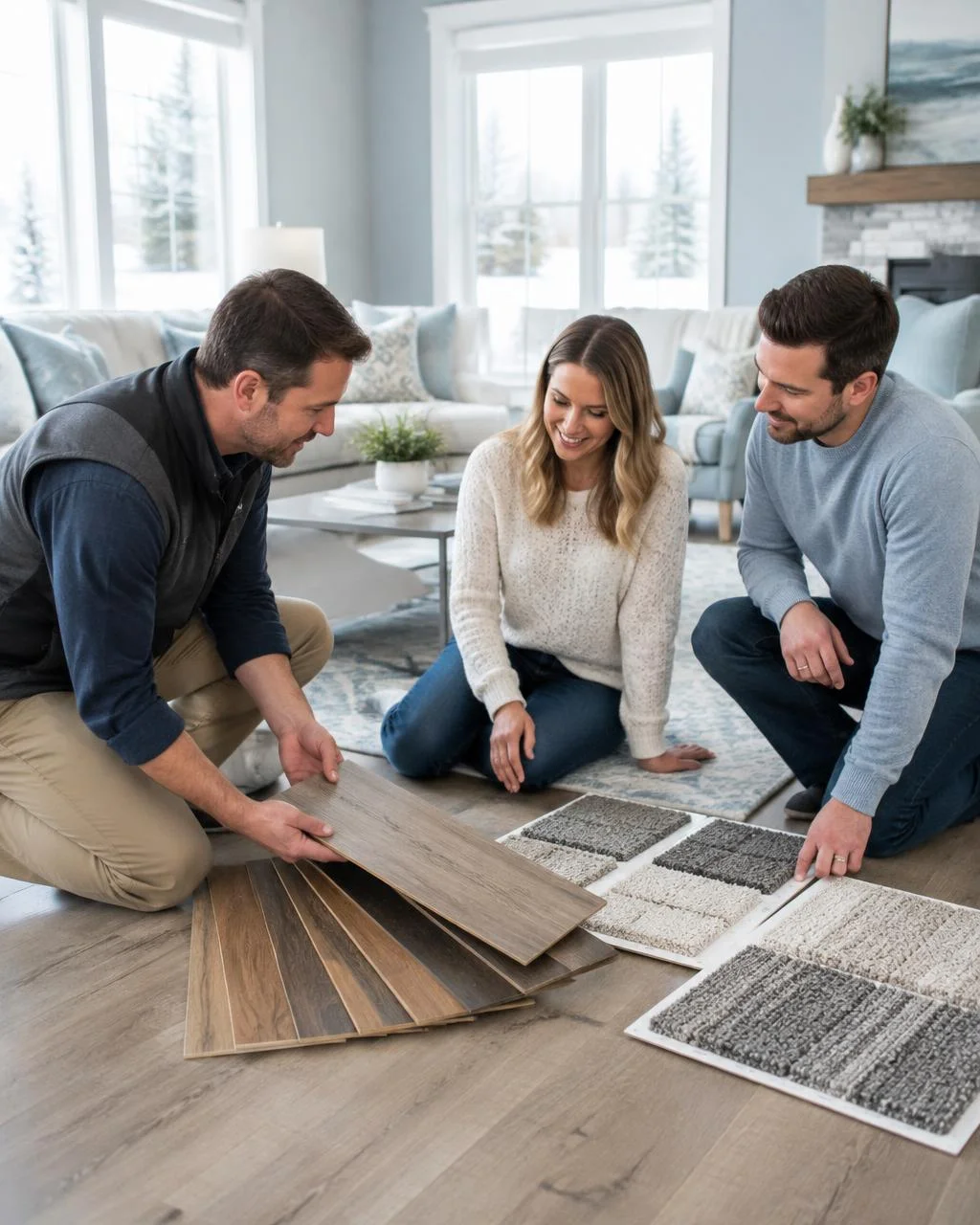
We carry and trust names such as Kahrs, Mohawk, Shaw and Mannington, and because our showroom is mobile, you can see them in your own room and light.
Caring for Wood Through the Winter
- Keep indoor humidity steady rather than letting it bounce.
- Use mats at doors to catch salt and grit, and wipe up slush promptly.
- Place felt pads under furniture legs.
- Sweep or vacuum often; avoid steam mops.
- Trim pet nails and clean up spills quickly.
A Word on Budget
Price differences between solid and engineered are smaller than most people expect, because the cost is driven mostly by species, plank width and finish. Where the two really diverge is in what the install requires. Solid wood on a wood subfloor is simple; engineered over concrete may need moisture barriers and glue-down methods. Ask for the full installed quote so you are comparing complete jobs, and talk through our financing options if a premium floor is the goal.
If you are still unsure, we are glad to talk it through with no pressure. You can learn more about our approach on the about page, or ask a question through the contact page.